
Emergency Action Plan: Turning Preparation into Protection
An Emergency Action Plan (EAP) is more than a checklist, it’s a lifeline. It’s a clear, step-by-step guide designed to help divers respond quickly and effectively during unexpected situations, whether underwater or at the surface. By outlining key roles, communication methods, first aid procedures, and evacuation steps, the EAP ensures that everyone on board knows exactly what to do to keep themselves and others safe.
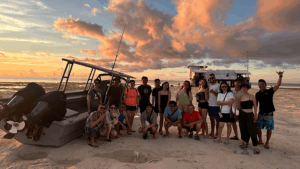
Before every trip sets sail, we take the time to ensure every guest understands what to do and what to expect should an emergency occur. This is not just about safety protocols, it’s about building confidence and trust among everyone on board.
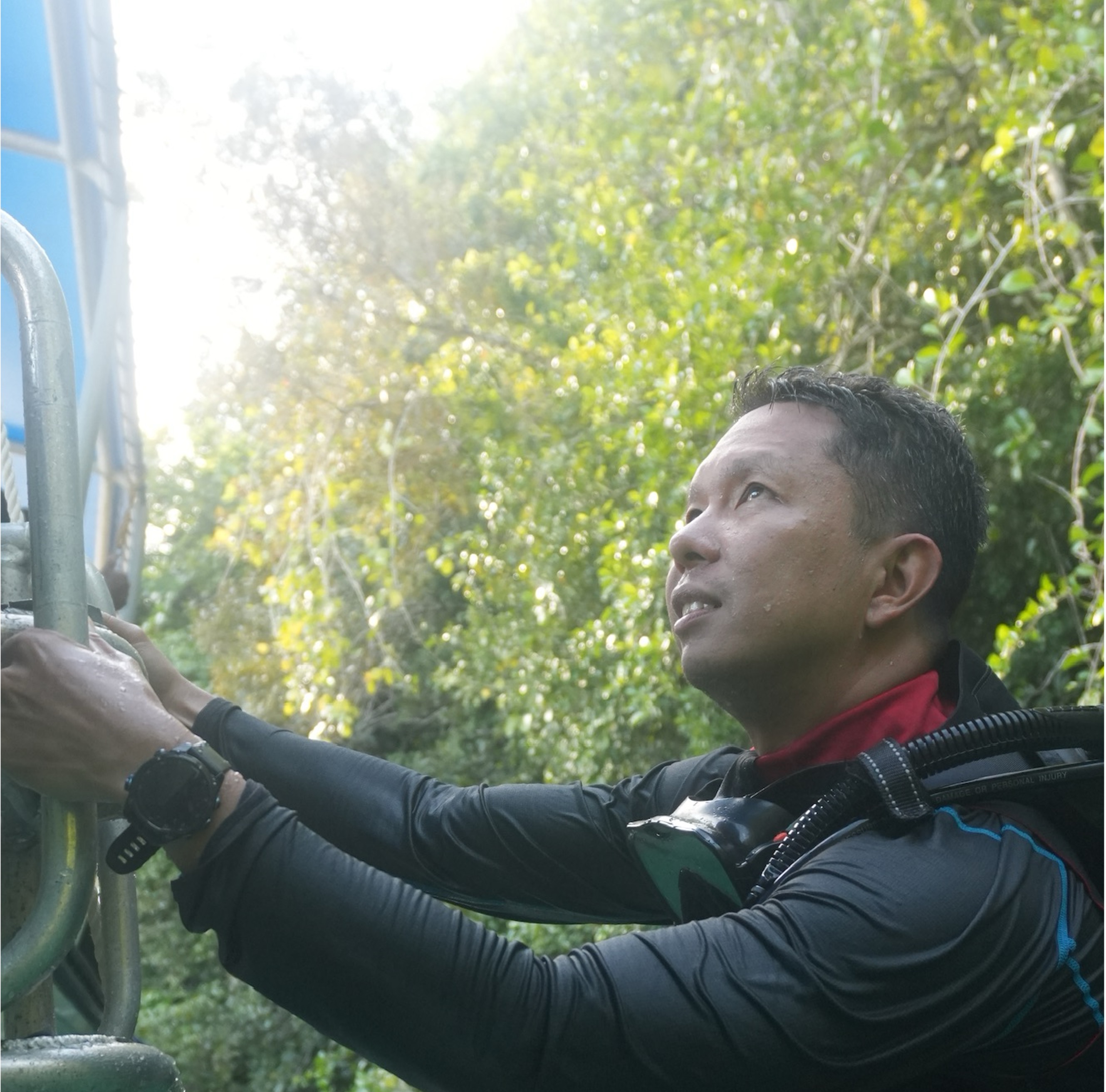
As Cruise Director, my role is both crucial and multifaceted. I am the bridge between guests and crew, absorbing the energy and emotions of those on board, and ensuring that the team performs their duties with precision and care. Beyond keeping safety at the forefront, I strive to make every journey exceed expectations, so guests leave not only with unforgettable memories of the dives, but also with the assurance that they were in capable, caring hands from start to finish.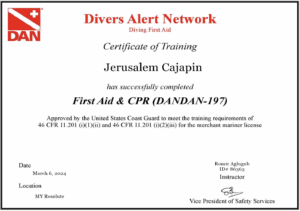
I am also a certified DAN First Aid & CPR provider, a qualification I earned through the guidance and training of Romir Aglugub. This training has proven invaluable in real-life emergencies, especially during our expeditions to remote locations like the Tubbataha Reefs.
Fire Emergency at Tubbataha
Last April, during one of our trips to Tubbataha, our preparedness was put to the test when a fire broke out at the aft of our boat. One of our crew spotted thick smoke billowing from a hole near the aft. I instructed our Chief Mate to announce that all guests should go to their cabins and await further instructions, ensuring they stayed calm and safe. We immediately grabbed fire extinguishers, but the smoke was so dense that locating the exact source was impossible at first.

With no proper gas mask on board, I quickly donned my scuba set and mask as an improvised breathing apparatus. Working together, the crew and I managed to contain the fire within minutes and declare it under control. The investigation revealed that garbage had been placed by one of the crew near the boat’s exhaust, which ignited and caused the fire.
Handling a Suspected Case of Skin Bends at Tubbataha Reefs
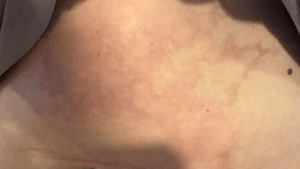
On May 12, during another liveaboard expedition at the Tubbataha Reefs, one of our guests developed unusual rashes on her abdomen shortly after completing her first dive on the second day. Upon assessment, I quickly suspected the sign as Skin Bends (Cutis Marmorata), a marbling purple rash, which is considered Type 2 Decompression Sickness (DCS).
I immediately administered high-flow oxygen at 12 LPM (she is a small lady) using a non-rebreather mask and requested the assistance of a guest physician onboard to conduct a full neurological exam. I also contacted DAN (Divers Alert Network) for guidance, receiving prompt confirmation that it was indeed a DCS case. DAN advised us to continue oxygen therapy, monitor the diver closely, and repeat the neuro exam after a few hours.
At that point, I had to make a difficult decision, whether to abort the trip and return to Puerto Princesa or continue the expedition. Safety always comes first, so I informed the captain we might need to end the trip if the diver’s condition worsened. Fortunately, after a few hours of continuous oxygen therapy, the rashes began to fade and here condition didn’t progress. I decided to continue with the cruise, but I remained vigilant, repeating neurological checks and monitoring the diver throughout the trip.
To give the guest peace of mind, I facilitated an online consultation with Dr. Arnel Bartolome, a hyperbaric medicine specialist. He explained the condition, possible progression, and recommended follow-up steps. His insights were reassuring and greatly appreciated by the guest.
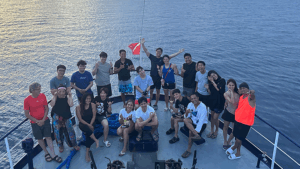
Although she sat out the remaining dives, we made sure she enjoyed the beauty and experience of being in Tubbataha, and other guests still experienced what they paid for. This incident reinforced an important truth, having a cruise director who is not only skilled in dive logistics and guest management but also trained and confident in handling dive-related medical emergencies can make all the difference. Quick recognition, decisive action, and coordination with medical professionals are essential when you’re days away from the nearest medical facility.

Preparedness, experience, and calm leadership under pressure are the foundation of safe and successful dive expeditions. Whether it’s managing fire emergencies, responding to suspected DCS, or simply ensuring everyone understands the EAP, my priority is to protect every guest and crew member, so we can all focus on what we came for: exploring the incredible beauty of our oceans.